Scope, preparation & finish planning
Ceilings show repairs, stains, sheen differences, and roller marks differently than walls
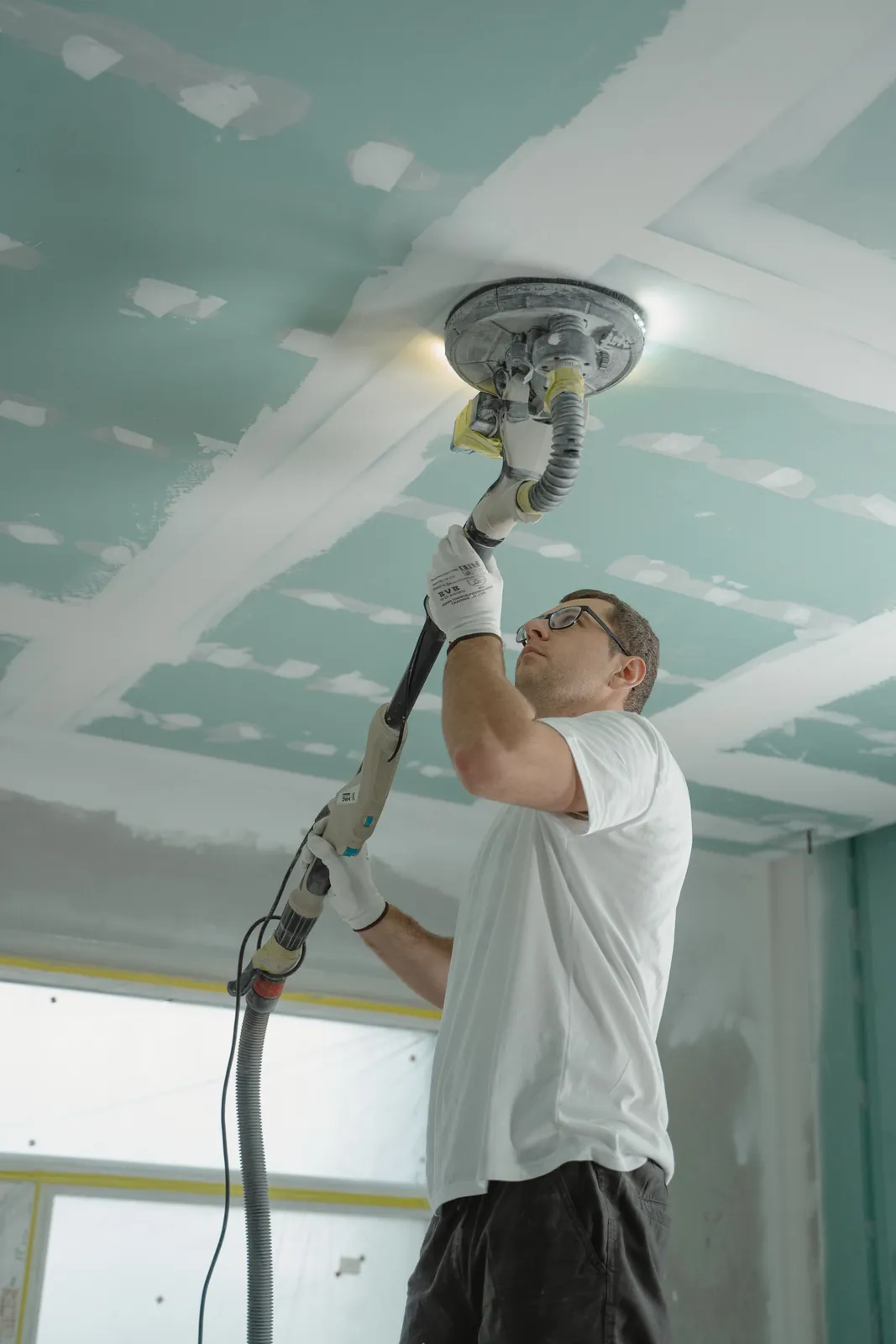
Ceiling projects may involve a simple color refresh, water-stain treatment, drywall access repair, texture blending, smoke or odor sealing, or full repainting after lighting and electrical changes.
Before coating, any active leak or moisture source must be corrected. Damaged drywall may need replacement, and remaining stains may require a product designed to block them from bleeding through the finish coat.
Texture repairs are challenging because pattern, thickness, age, previous paint, and lighting all affect the match. Even a carefully blended repair can remain visible when sunlight or fixtures wash across the ceiling.
Flat ceiling paints are commonly selected to minimize reflection and surface irregularities, while bathrooms, kitchens, and selected high-moisture areas may call for a more washable or moisture-aware product.
A whole-ceiling repaint may give a more consistent result than a spot touch-up, especially when the existing paint has aged, yellowed, or changed sheen. The estimate should explain repair limits and the expected final appearance.
Items to include when comparing proposals
- Whole-room and whole-home ceiling repainting
- Water stains after the source has been corrected
- Drywall patches, access holes, cracks, and nail pops
- Knockdown, orange-peel, smooth, and other texture discussions
- Popcorn ceiling condition and testing questions before disturbance
- Kitchen, bathroom, bedroom, and high-ceiling projects
- Stain-blocking primer and odor-sealing considerations
- Scaffolding, ladders, furniture protection, and ventilation
Questions homeowners often ask
Can a ceiling stain be covered with regular paint?
Stains can bleed through standard finish paint. After the source is corrected and the area is dry, a suitable stain-blocking primer may be needed before the finish coat.
Will a repaired ceiling texture be invisible?
A perfect match cannot always be guaranteed. Texture age, pattern, lighting, and previous coatings can make transitions visible, although broader blending and full repainting may improve the result.
Should popcorn ceilings be tested before sanding or removal?
Older textured materials may warrant testing before disturbance. The property's age, material history, and applicable safety rules should guide the next step.