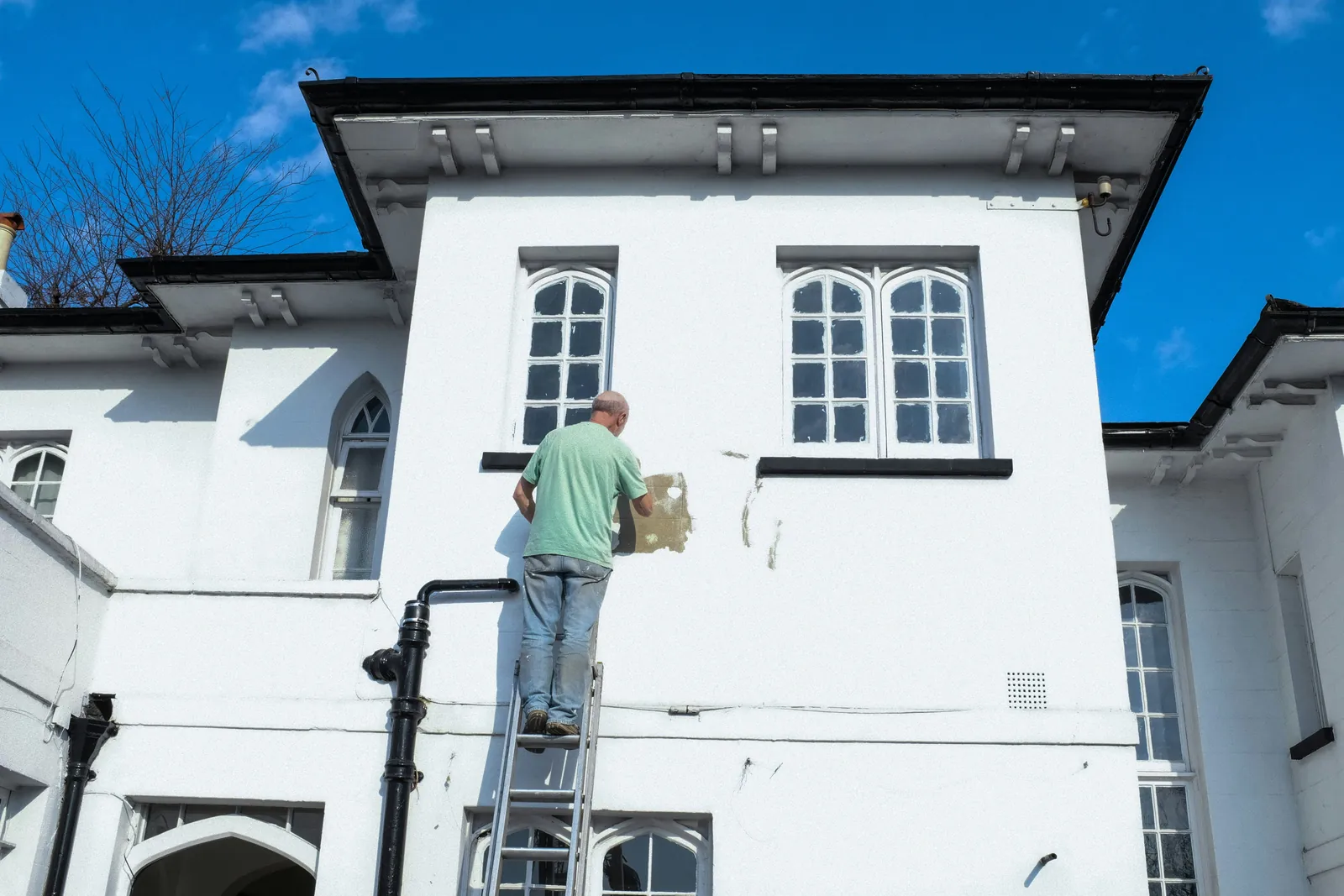
Scope, preparation & finish planning
Cleaning is important, but preparation must be matched to the surface and allowed to dry
Exterior surfaces collect dirt, pollen, mildew, salt residue, chalk, cobwebs, and other contaminants that can interfere with paint adhesion and appearance.
Pressure washing is one tool, not a universal answer. Excessive pressure can scar wood, force water behind siding, damage stucco, disturb sealants, and create leaks around windows and doors.
Soft washing, hand cleaning, controlled rinsing, scraping, sanding, and spot treatment may all be part of preparation. The method should be selected according to the material and coating condition.
After washing, the surface needs enough time to dry. Humidity, shade, temperature, material thickness, rain, and hidden water paths affect how long that takes.
The estimate should explain which preparation tasks are included and how the contractor will address loose paint, chalking, mildew, cracks, failed caulk, bare areas, rust, and damaged substrates.
Items to include when comparing proposals
- Controlled pressure or soft washing based on the substrate
- Mildew and organic growth treatment where appropriate
- Chalk, salt, dirt, pollen, cobweb, and residue removal
- Scraping and sanding of loose or feathered paint edges
- Caulk, sealant, stucco patch, wood repair, and rust treatment
- Drying time after washing and weather events
- Spot primer, full primer, and bare-substrate protection
- Protection of windows, doors, electrical items, plants, and pavers
Questions homeowners often ask
How long after washing can exterior painting begin?
Drying time varies by weather, shade, substrate, pressure used, and how much water entered joints or porous materials. The surface should be dry and within product requirements before coating.
Will pressure washing remove all peeling paint?
No. Washing may remove some loose material, but scraping, sanding, and edge feathering are often needed afterward.
Can bleach be used to clean every exterior?
Cleaning chemistry should be chosen for the contaminant, surface, landscaping, runoff, and product directions. A universal mix is not appropriate for every material.